
Clarity: The Work Behind Better Work

Most of the challenges I see inside organizations aren’t actually about strategy or talent. They’re about clarity. Or more accurately… the lack of it.
It rarely gets named directly. Instead, it shows up as friction: “This feels messy.” “I’m not sure what’s expected.” “We keep talking about this but nothing changes.” “Why are we doing this again?” “No one ever makes decisions.” Over time, those small moments of confusion start to stack. They slow things down, create tension, and make good work harder than it needs to be.
A thing I wish I learned earlier
Personally, one of the areas I could have improved much earlier in my career was getting and giving clarity. Not strategy. Not execution. Clarity.
For a long time, I operated under this quiet assumption: I must be the only one in the room who doesn’t understand.
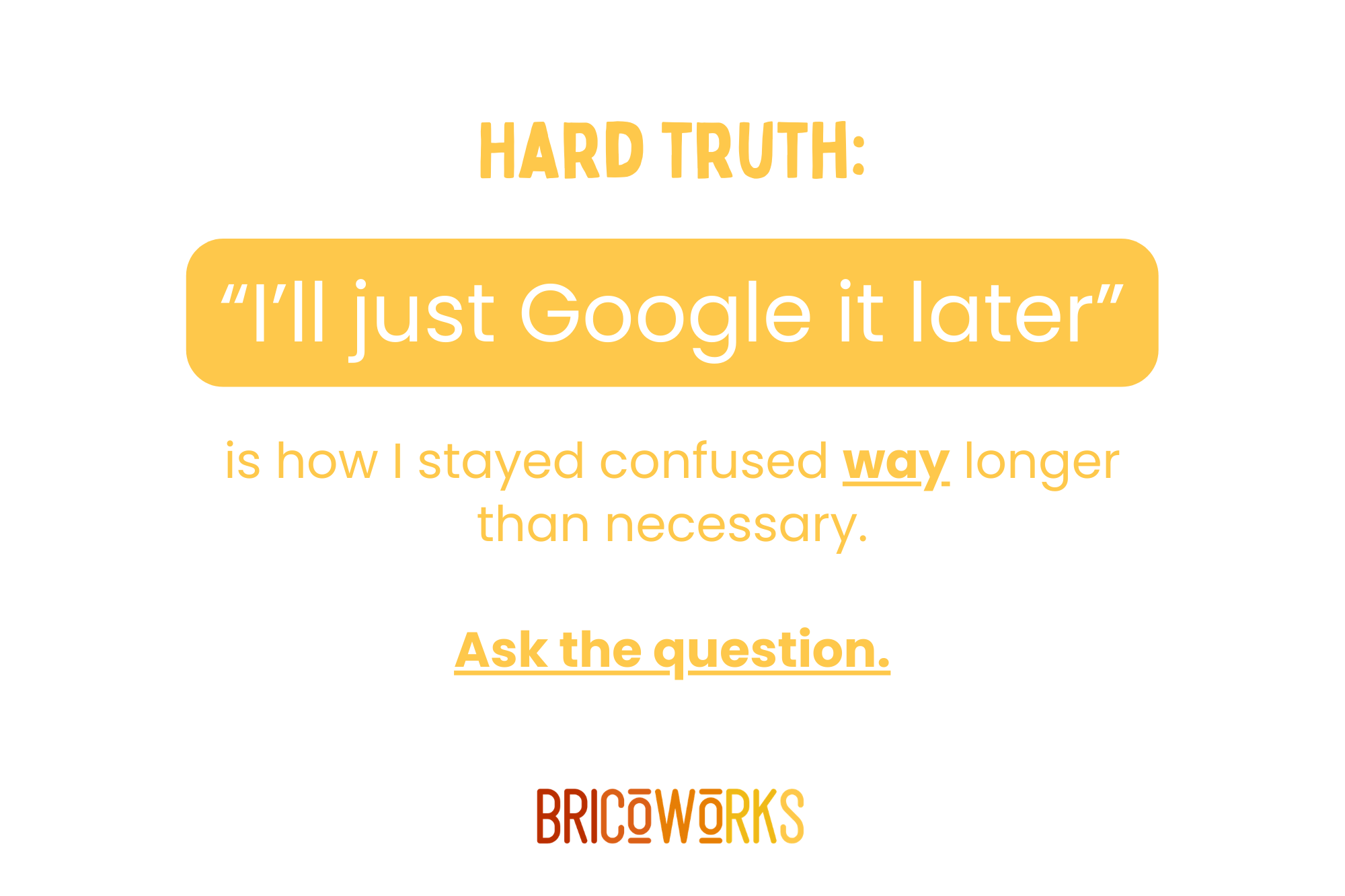
So I stayed quiet. I told myself, “I’ll figure it out later.” “I can just Google it.” “I don’t want to slow things down.” And sometimes I did figure it out. But a lot of the time, I spent hours trying to piece together something that could have been clarified in two minutes.
Even worse, I carried that low-grade feeling of “Am I missing something? Am I the problem?” What I didn’t realize at the time was this: I was rarely the only one confused. Most of us were sitting in the same room, quietly wondering what the heck was going on… and no one was saying it.
The part we don’t talk about
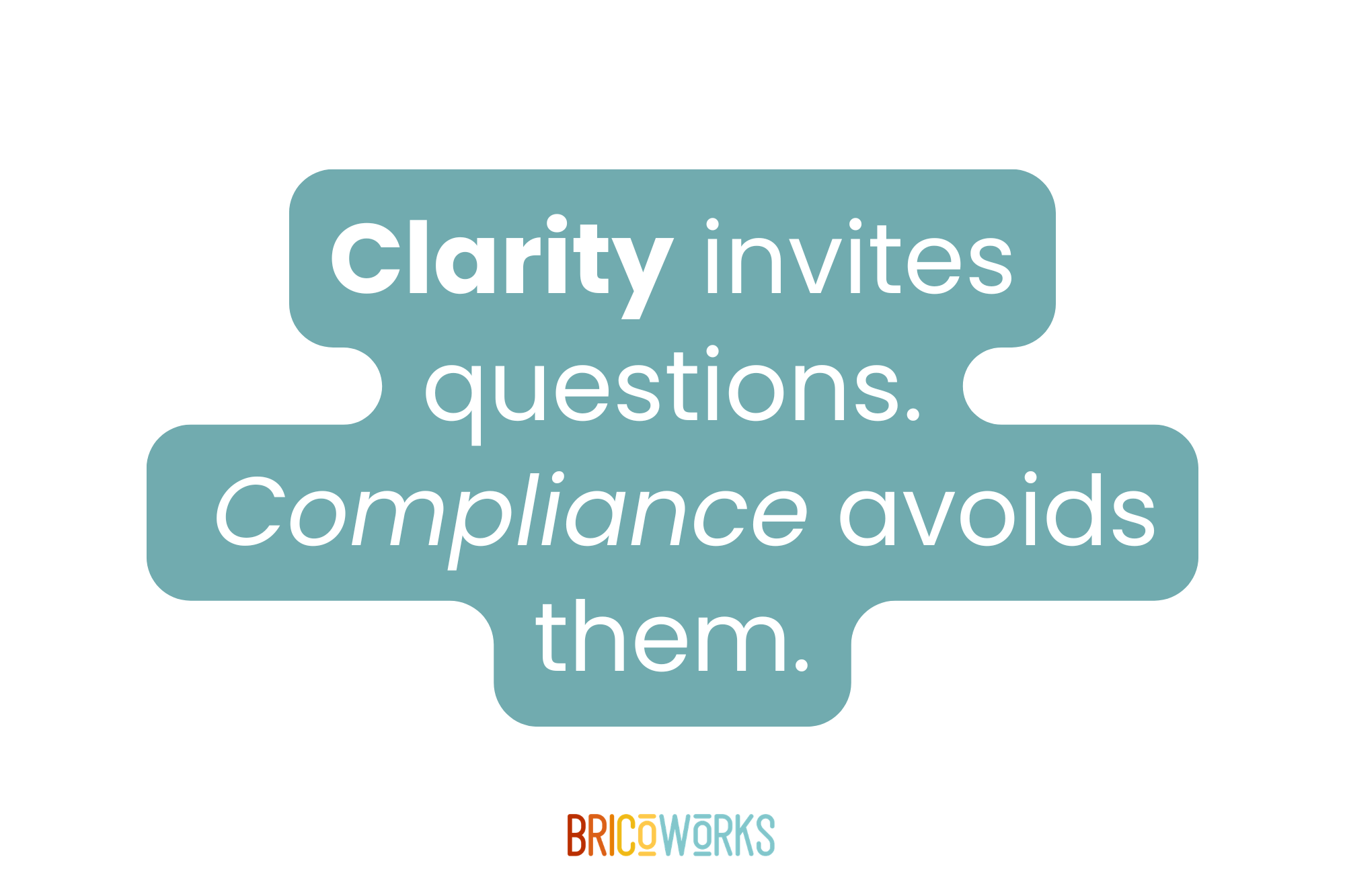
Clarity sounds good in theory. In practice, it often looks like asking more questions and slowing things down. And that can be misread as pushback or defiance. I’ve felt my defenses kick up when someone asks a clarifying question. And I’ve also been the over-explainer, trying to prevent questions by saying more.
Neither creates clarity.
More information doesn’t always help. And unanswered questions don’t go away.
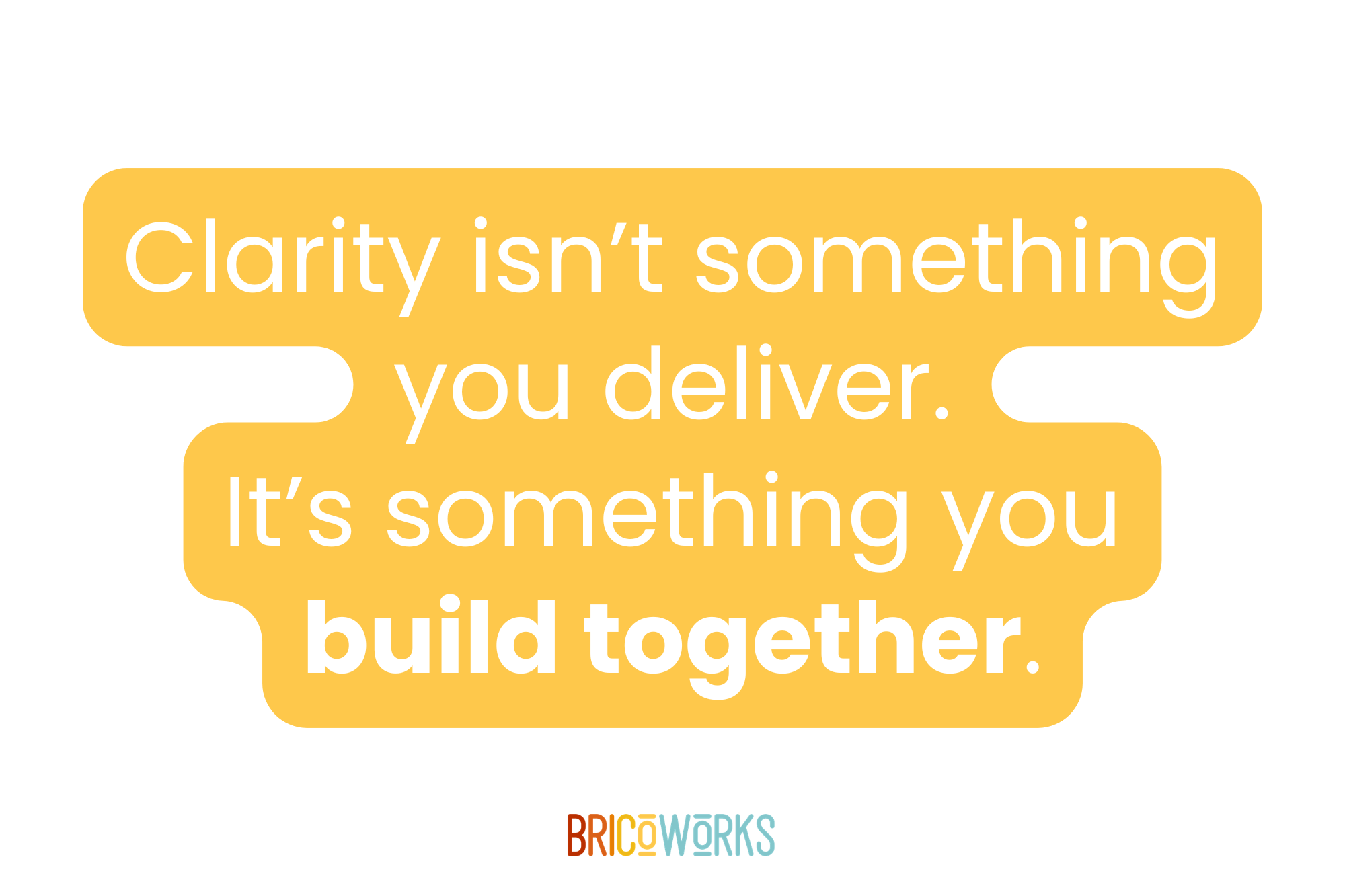
Clarity isn’t something one person provides. It’s something people build together through questions, conversation, and shared understanding.
Getting clarity and giving clarity are related, but they’re not the same skill. Getting clarity often looks like asking simple, direct questions, naming confusion out loud, and slowing things down just enough. Giving clarity is not just about sharing more information. It’s about creating the conditions where clarity can actually be built.
That means:
sharing the right amount of information
meeting people where they are
and opening space for questions
Clarity is not something we hand off. It’s something we co-create.
Clarity is also a signal of trust
Clarity isn’t just about efficiency. It’s about trust.
On healthy teams, you’ll see people ask questions openly, say “I’m not quite following,” name when something feels unclear, and challenge assumptions without fear. You’ll also see leaders model that behavior by inviting questions, pausing to check understanding, and making it safe to not have it all figured out.
That’s not a sign of dysfunction. It’s a sign of psychological safety.
It means people trust that they won’t be judged for not knowing, shut down for asking, or penalized for slowing things down to get it right.
And when it’s missing, it shows up in a different way. When people don’t ask questions, when everything seems “fine,” when no one pushes or clarifies… that’s not always alignment. It’s often a signal. A signal that people don’t feel safe asking, are protecting themselves, and are choosing silence over risk.
And that silence is expensive. Because confusion doesn’t go away. It just goes underground.
A simple shift
When something feels off, instead of asking “Why does this feel so hard?” try asking: Where is clarity missing?
Because clarity shows up in different places across how your organization works.
1. Directional Clarity
Do we know what matters right now? What are we actually trying to do? What are the priorities? What are we not doing? If this isn’t clear, everything feels urgent and teams drift.
2. Role Clarity
Do people know what they own? Who is leading? Who is supporting? Who decides? If this isn’t clear, things fall through the cracks or get duplicated.
3. Operational Clarity
Do we know how work moves? How do decisions get made? What happens after meetings? If this isn’t clear, work slows down and gets revisited.
4. Communication Clarity
Are we actually saying the thing? Are expectations explicit? Is feedback usable? Are we creating space for questions? If this isn’t clear, people guess, and guessing creates tension.
5. Expectation Clarity
Do people know what “done” or “good” looks like? Not just individually, but together?
What does success look like? What’s the timeline? What level of quality are we aiming for?
When this is clear and shared, people can move with confidence. When it’s not, people work hard but miss the mark, and feedback feels subjective or frustrating.
Clarity here is mutual. It’s not just stating expectations. It’s confirming shared understanding.
It’s all connected
When clarity breaks down in one place, it shows up somewhere else. Unclear priorities lead to messy projects. Unclear roles create team tension. Unclear expectations lead to performance issues. Unclear communication makes everything feel harder than it should.
Clarity isn’t a one-time fix. It’s something you build into how you work.
Start small
You don’t need to overhaul everything. Just look for one moment this week where things feel slightly confusing, slightly tense, or slightly unclear, and ask: What would make this clearer?
Then don’t just say the thing. Create space for others to respond, question, and shape it with you.
Final thought
Clarity isn’t about being rigid or overly formal. It’s about reducing unnecessary guesswork so people can do their best work.
And in that way, clarity is less about control and more about care.
And maybe even more than that, it’s a quiet but powerful way we build trust with each other.
